
When a traditional trade fully embraces the digital age of the 21st century!
The world is changing. And with it, the trade of antiquarian.
Long associated with a nearly static image—quiet display cases, cluttered storage rooms, knowledge passed down in hushed tones—the antique trade is now undergoing a profound transformation. A subtle but irreversible evolution.
For behind the beautiful 20th-century pieces and prestigious signatures, a new reality is taking hold: that of a globalized, connected, and instantaneous market.
The antique dealer’s role hasn’t changed. But the tools of the trade have.
Digital technology: the catalyst for a silent transformation
The shift is no longer theoretical. According to data from Fevad, more than 20% of transactions involving art and design objects now take place online. This proportion continues to grow, driven by the internationalization of the market and changing consumer habits. Specialized platforms, digital galleries, online sales, targeted newsletters, and social media: visibility has never been more accessible to dealers, even the most independent ones.
But this accessibility should not be confused with automatic democratization.
Digital technology is not an end in itself. It is a lever. A tool in the service of a practice, not a substitute for the craft.
Because opening an Instagram account or publishing an online catalog isn’t enough to reinvent oneself. What makes the difference isn’t the digital presence itself, but the way it fits into a coherent, rigorous, and well-documented strategy. Digital technology amplifies what already exists: solid expertise, a keen eye, and the ability to tell the stories behind objects and guarantee their authenticity.
Used with discernment, it extends the traditional craft of the antique dealer. It gives the selection greater reach, streamlines the relationship with collectors, and broadens the circle of enthusiasts beyond physical borders. Misused, it reduces the profession to a mere showcase or a race for visibility, at the expense of meaning and quality.
In this quiet transformation, digital technology replaces neither knowledge, nor experience, nor the long term. It complements them—and reveals, more than ever, those who truly master their subject.
Digital technology sets the stage for encounters; the market brings them to fruition.
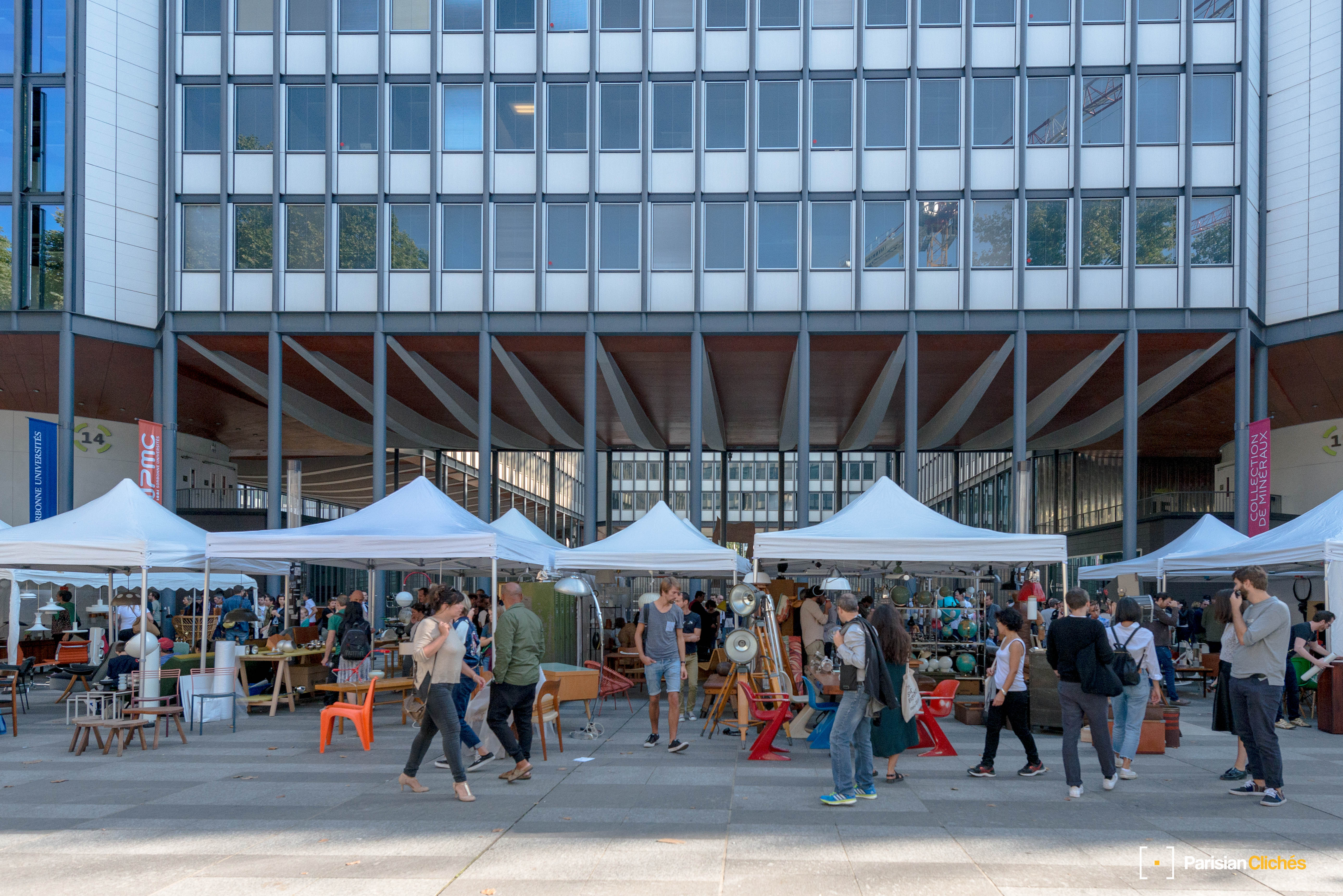
While digital technology broadens horizons, it does not replace direct contact. Quite the contrary: it restores the full value of the real world. Specialized markets, such as Undesignable, now play a key role in bridging the gap between digital visibility and physical presence. They are places for meeting, verification, and dialogue—where the object leaves the screen to regain its true scale.
For professionals, these events are essential. They provide opportunities to meet peers, discuss practices, exchange perspectives, and share common points of reference. In a profession that is often solitary, the market becomes a space for collective respite—a moment to step away from the digital flow and reconnect with a tangible community.
For the public, it is just as crucial. Seeing a piece in person, appreciating its materials, proportions, and patina, hearing its story told by the person who chose it: this experience cannot be downloaded. It must be lived. Digital technology sets the stage for the encounter; the market brings it to life.
Undesignable fits precisely into this hybrid logic. Here, digital technology acts as a catalyst for knowledge and curiosity; the market, as a space for learning, knowledge transfer, and trust.
Together, they are shaping a new way of bringing 20th-century design to life—one that is both connected and deeply human.
An augmented practice: portability, digitization, automation
Digital technology is transforming the very structure of the profession.
Portability, first and foremost. Inventory is no longer confined to a store or a warehouse. Thanks to connected tools—databases, ERP systems, back-office software—an antique dealer can present their inventory in real time, at a trade show, at a client’s home, or on the other side of the world. Is a collector in Tokyo interested in a Gae Aulenti armchair? They can examine it, zoom in, compare it, and ask questions—instantly.
Digitization, next. Sales proposals, certificates, invoices, purchase histories: everything flows faster, without friction. This traceability strengthens the relationship of trust, professionalizes the customer experience, and serves as a valuable record for insurance, resale, or building collections.
Automation, finally. Follow-ups, availability alerts, product suggestions, multi-channel management… When used effectively, these tools reduce the dealer’s mental workload and free up time for what really matters: research, expertise, and discernment.
An antique dealer first and foremost: a conveyor of meaning
However, the heart of the trade does not disappear. It is becoming more defined, more robust, and more transparent.
The antique dealer is not merely a seller of old objects. He is a conveyor of meaning—the one who connects a piece to its context of creation, a form to an intention, a material to an era and a use. As a specialist in a particular style, designer, movement, or period, he fulfills an essential cultural role: making intelligible what, without him, would remain silent or merely decorative.
The antique dealer takes on this responsibility. He guarantees authenticity, investigates provenance, assesses value, and places the object within a broader historical context—artistic, social, and industrial.
This expertise rests on a subtle balance between documentary research, technical knowledge of materials and processes, a critical eye honed by experience, and intuition refined by years of practice.
In this context, digital technology is not a substitute for knowledge. It is an extension of it. It allows us to document, archive, compare, and transmit. A well-structured entry, a precise photograph, and a contextualized text make this knowledge visible and shareable, far beyond the walls of a shop.
The process remains the same—understanding, selecting, explaining—but its impact is amplified. The profession remains deeply human, even as it enters a new era of knowledge sharing.
An embraced evolution, never a break
Talking about the “antiquarian 2.0” does not mean inventing a new profession, but rather recognizing the intelligent adaptation of an ancient craft to its time.
It is neither a matter of breaking with tradition nor of freezing it in place, but of evolving its practices in the face of a world in constant flux. What gives the antique trade its value remains intact: rigorous selection, a long-term perspective, the traceability of pieces, and a discerning eye and skilled touch. Digital technology does not erase any of this. It simply offers new tools to support these fundamentals, making them clearer, more accessible, and more sustainable.
Far from artificial dichotomies between old and new, today’s antique dealer embraces this duality of time. He knows that neither the hunt for treasures, nor that instant connection, nor the conversation can be replaced. But they have come to understand that these elements can be extended, amplified, and shared through digital tools.
A future to be shaped, not feared
Dealers specializing in 20th-century design—often coming from related fields such as architecture, graphic design, photography, and publishing—are already embodying this gradual transformation. They have mastered contemporary visual codes, are active on digital platforms, have developed an editorial voice, and cultivate their visibility with the same rigor they apply to their curation.
They have come to realize a simple truth: expertise is no longer enough if it is not shared. Telling the story of an object, contextualizing a piece, and explaining a choice have become just as essential as offering it for sale.
The antique dealer of tomorrow will therefore be as much a storyteller as a merchant, as connected as they are cultured. A conveyor of meaning in a fast-paced world, where value is measured less by speed than by the accuracy of one’s eye.
Achille