
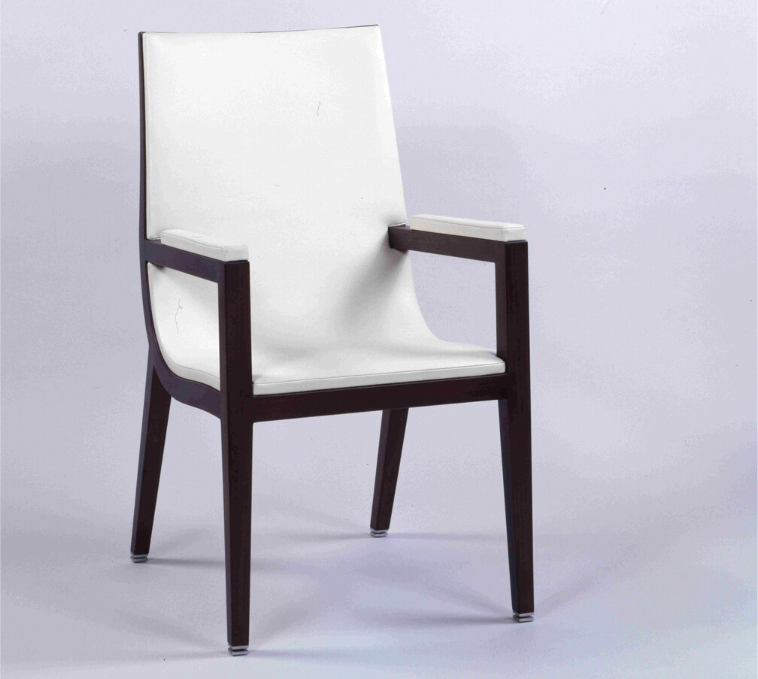
Le résultat est le Fauteuil du président de la République GMC 503, une pièce sobre et élégante, pensée pour remplacer l’ancien fauteuil de style Empire en velours cramoisi. Christophe Pillet ne s’est pas contenté de dessiner un siège unique : il imagine une véritable hiérarchie de l’assise, en créant également le Fauteuil de haute personnalité GMC 502 et la Chaise de ministre GMC 501.
Chaque modèle présente des variations subtiles, permettant d’affirmer la place de chacun sans ostentation excessive.
Un design discret, mais porteur de symboles
Le fauteuil présidentiel tranche par sa modernité. Sa coque sombre en preto, un bois dense d’Amérique du Sud, repose sur un contreplaqué solide et s’illumine grâce à un cuir ivoire raffiné. Les lignes pures rappellent les premiers meubles en acajou que Pillet avait conçus pour XO, mais ici, elles gagnent en monumentalité et en solennité. Le designer explique avoir voulu trouver un archétype intemporel, associant "confort et sérieux non austère".
Ce parti pris de discrétion formelle n’a rien d’anodin. Comme le souligne Christophe Pillet, il s’agissait avant tout de mettre en avant "le savoir-faire des artisans", et non d’imposer un geste de designer trop voyant. L’élégance classique du fauteuil se marie ainsi parfaitement avec l’événement, symbole d’union nationale et de tradition républicaine.
Du velours Empire au modernisme républicain
Jusqu’en 1999, les présidents de la République prenaient place dans un fauteuil de style Empire, reconnaissable à son assise et ses accoudoirs en velours cramoisi.
Le choix du Mobilier national, à l’aube du nouveau millénaire, de solliciter Christophe Pillet marque une rupture esthétique forte : passer du langage ornemental hérité du XIXᵉ siècle à une expression plus contemporaine, sobre et universelle.
Seul un exemplaire du fauteuil présidentiel existe, mais l’ensemble complet est constitué de huit fauteuils pour les hautes personnalités et d’une quarantaine de chaises pour les ministres.
Chaque 14 Juillet, cet ensemble revient sur le devant de la scène nationale, installé dans la tribune présidentielle, elle-même conçue par la designeuse française Marie-Christine Dorner.
Une pièce qui a trouvé sa place dans l’histoire
Le fauteuil présidentiel de Christophe Pillet n’est pas seulement fonctionnel : il a aussi trouvé sa place dans l’histoire du mobilier d’État.
Il a été présenté dans plusieurs expositions organisées par le Mobilier national, notamment "Trônes en majesté" au château de Versailles en 2011, puis "Sièges en société : du Roi-Soleil à Marianne" à la Galerie des Gobelins en 2017.
Ces événements rappellent combien les sièges ne sont pas de simples objets utilitaires, mais des symboles du pouvoir et de l’identité collective.
Achille