
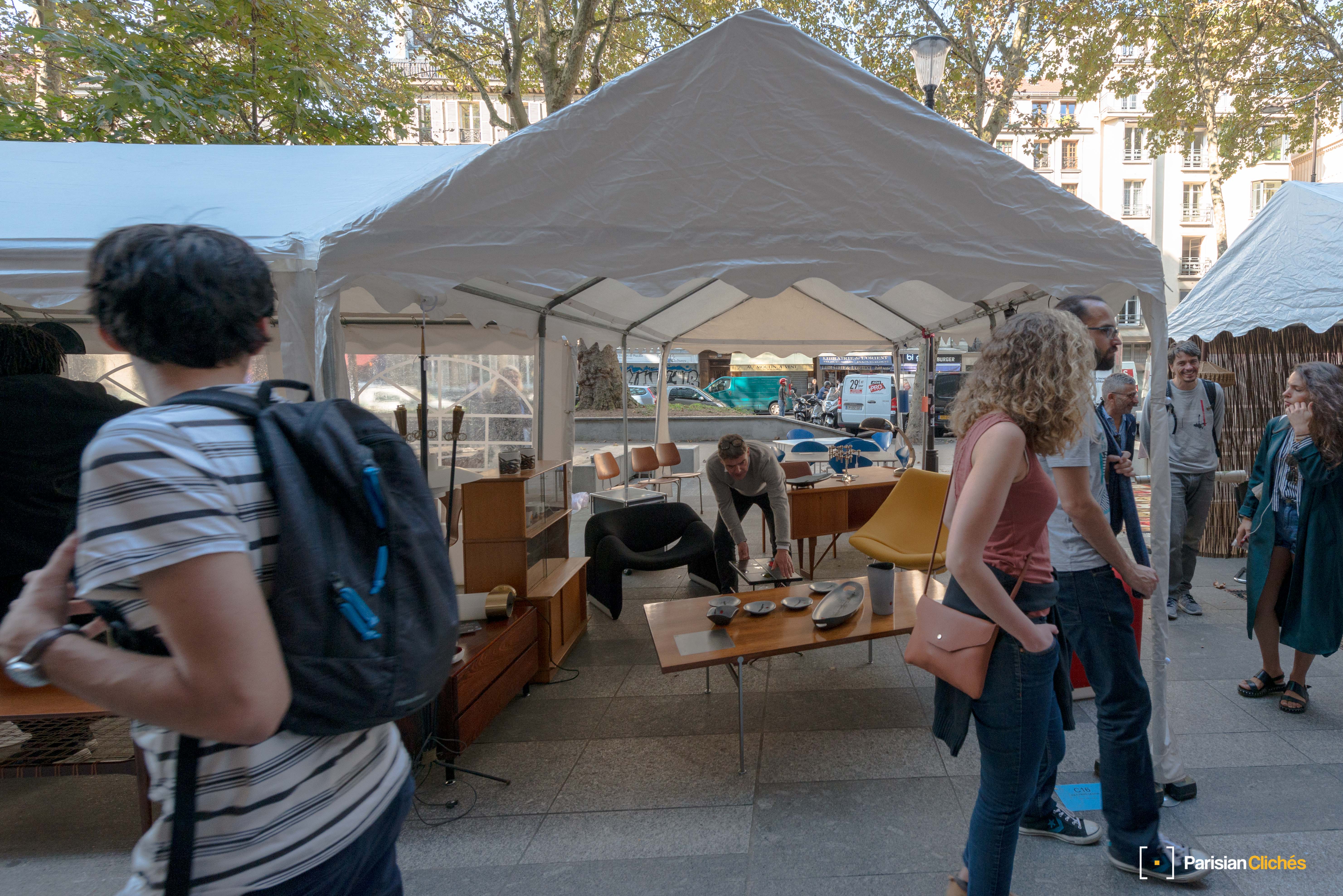
A World Filled with Objects
On average, more than 500 objects fill our homes: lamps, tables, chairs, vases. Some go unnoticed, while others tell a story. Because a piece of furniture is never neutral. It bears witness to an era, a technique, a creative gesture.
That is why identifying, understanding, and contextualizing an object is not a luxury but a necessity. It’s not just its function that gives it value, but its design, its patina, and its cultural significance.
Vintage: The Authenticity of the Vintage
The term “vintage” comes from the vocabulary of wine: a good vintage.
By extension, it applies to objects of the decorative arts and is widely adopted by thrift stores.
A piece of furniture is vintage when it is from that era, authentic, unaltered, and not a reissue. It may have been mass-produced or made by an industrial manufacturer, but it retains the mark of its era.
Its value lies in its patina, its authenticity, and its ability to evoke cultural memories.
Furthermore, buying vintage means consuming in an eco-responsible way: extending an object’s life, saving it from oblivion, and giving it a new purpose.
Design: A Matter of Intention
“ Design” comes from the Old French word “dessein”: a drawing that embodies a project.
A design piece of furniture isn’t just beautiful; it’s conceived to transform a function, introduce a new material, or address a social or technical challenge.
It is this intention that distinguishes Jean Prouvé’s chair, Charles and Ray Eames’ Lounge Chair, or Pierre Paulin’s Tongue armchair from a mere decorative piece.
Buying design isn’t about giving in to nostalgia; it’s about choosing an object imbued with meaning, designed to harmonize functionality, aesthetics, and humanity.
Decor: vagueness and immediate impact
“Decor” is a generic term, popularized by magazines, that lumps everything together: rough reissues, DIY makeovers, and creations intended simply to “look pretty.”
In this context, visual impact takes precedence over history and function. Whereas design and vintage are rooted in culture and memory, decor often settles for instant appeal.
Industrial: Sturdiness and Authenticity
Industrialfurniture, on the other hand, comes from the working-class world: Tolix chairs, factory workbenches, workshop lamps.
Designed to endure rather than to charm, these objects are now sought after for their sturdiness and authenticity.
But be careful: the “industrial” style has become a trend, widely copied without any connection to its history. Hence the need to distinguish a genuine heritage piece from its decorative imitation.
Why be precise?
At Undesignable, we believe that precise terminology protects the object and informs the buyer.
An armchair designed by Pierre Paulin cannot be equated with a generic reissue.
Correctly naming an object preserves its value, its history, and its function. It also makes the act of purchasing part of a more responsible approach: choosing the authentic, extending the product’s life cycle, and honoring its history.
Design is not a trend. It is a culture.