
Au début des années 2000, Edouard Bernard repère un siège abandonné sur un trottoir de la rue Saint-Honoré, à Paris. Séduit par sa matière – du carton –, ses lignes cylindriques, le jeune collectionneur de design emporte la pièce.
Quelques mois plus tard, il retrouve des modèles similaires lors d’une vente à Drouot : « C’est comme ça que j'ai compris que mon meuble était l’œuvre de Jean-Louis Avril » raconte-t-il.
Apprenant qu’il habite dans le 13e arrondissement, Edouard Bernard le rencontre. « J’étais content de découvrir l’artiste. Il m’a montré son travail, sa documentation. Nous nous sommes liés d’amitié. L’idée d’un livre sur cette histoire a germé peu à peu ». L’ouvrage coécrit avec Anne Bony et Flavien Gaillard vient tout juste de paraître.
Noces de carton
Disparu cette année, quelques jours avant la sortie de cette biographie, le designer est une référence incontournable en matière de mobilier en carton en France. Son inspiration est liée… à son beau-père !
Jean-Louis Avril épouse Michelle Marty en 1965, il découvre l’activité de M. Marty qui commercialise des containers de cartons produits par la Compagnie sucrière de Pithiviers. Ce dernier lui fait visiter l’usine.
Très vite, le jeune homme détourne quelques bidons pour concevoir un premier fauteuil. « Le premier prototype est mis au point en 1966, raconte Edouard Bernard. Ce modèle séduit son beau-père qui le pousse à déposer un brevet, enregistré l’année d'après ».
Une cinquantaine de pièces suivent : chauffeuses, chevets, chaises pour enfants d’âges divers, tabourets, bibliothèques et colonnes de rangement de hauteurs variables, tables basses, bars, coffres, bureaux, cintres, lits…
M. Marty crée la société Marty-LAC (les applications du carton). Il ouvre un atelier qui produit meubles et objets en Seine-et-Marne. Jean-Pierre Bourson, technicien, assure la mise en œuvre des modèles, puis l’équipe s’étoffe avec le succès de la marque.
Du container au siège
Le mobilier du designer est réalisé à partir de plaques de celloderme, un carton dense et très dur, fabriqué avec des fibres cellulosiques en suspension fortement pressées puis séchées sur des toiles.
Issue du réemploi de papier, carton, bois et de chiffons, cette matière peut ensuite être découpée, pliée, thermoformée… Elle se prête ainsi parfaitement à la conception d’accessoires et de meubles.
Les créations de Jean-Louis Avril suivent un processus industriel similaire à celui utilisé pour former les bidons. Chaque pièce est découpée puis mise en forme avec une enrouleuse à froid. Les éléments circulaires des assises et des plateaux sont quant à eux humidifiés et emboutis à chaud, afin de recourber leurs bords.
Les différentes parties sont alors fixées « avec des agrafes sur les premiers modèles, précise le spécialiste. Puis rapidement, avec un système de rivets ». Les chutes sont utilisées pour doubler certaines extrémités des meubles.
Dans l’air du temps
Si le carton est rare dans la production de mobilier des années 1960-1970, les œuvres de Jean-Louis Avril ne détonnent guère dans le design du moment. Joe Colombo (pour Bernini), Anna Castelli Ferrieri (pour Kartell) et d’autres précurseurs ont déjà exploré les lignes cylindriques avec des réalisations en bois, métal ou plastique.
Les formes minimalistes et élégantes se glissent facilement dans tous types d’intérieurs. L’aspect ludique et les prix modérés se prêtent bien à un usage d’appoint ou pour équiper une chambre d’enfant.
Avril compte parmi les rares créateurs à proposer des modèles de différentes tailles pour s’adapter à l’âge des jeunes utilisateurs. « Les innombrables possibilités de couleurs (plus d’une centaine de laques !) répondent à la fantaisie de l’époque. On peut ainsi trouver du mobilier jaune moutarde, rose ou vert… », complète Édouard Bernard.
Une offre luxueuse « qui leur a coûté beaucoup d’argent, car la teinte pouvait ne servir qu'à une unique commande, puis jetée ensuite. »
Amateur d’architecture brutaliste, Jean-Louis apprécie le carton simplement protégé d’une couche de verni. L’acheteur a enfin la possibilité d’acquérir un meuble sans finition afin de le personnaliser. « Hélas ! Je n’ai jamais croisé ces pièces, hormis un bureau très mignon que Jean-Louis a peint pour une de ses petites filles. Je lui avais dit que c'était dommage de le transformer. Moi, j'avais une approche de collection, mais lui, ça ne le dérangeait pas. »
Une production médiatisée
Le créateur rêve de proposer un design populaire, accessible au plus grand nombre. Mais, la fabrication demeure relativement artisanale et les prix restent donc plus élevés que ce qu'il imaginait.
Les œuvres du designer profitent toutefois de l’intérêt de la presse déco pour cette matière originale. De même, elles s’affichent dans bien des événements. Les meubles sont exposés à l’Ideal Home Exhibition de Londres (1966), au Hilton papier Paris et à l’exposition universelle de Montréal (1967).
On les retrouve à Made with paper au Museum of contemporary art craft de New-York, aux Floralies et aux Assises du siège contemporain au Musée des Arts déco à Paris, ou encore à la triennale de Milan (1968).
L’architecte d’intérieur Andrée Putman commande un aménagement sur mesure pour un magasin de vêtements à Saint-Tropez (1967).
Certaines œuvres sont mises en scène au théâtre ou au cinéma : le Samouraï de Jean-Pierre Melville (1967) et Prisonnière d’Henri George Clouzot (1968).
Les créations sont diffusées au sein d’une boutique parisienne et sur catalogue. Puzzle, MOU, les Loges de l’Odéon et bien d’autres boutiques de décoration à Paris, en province et même en Grande-Bretagne les proposent aussi.
Avec la crise économique et la disparition de M. Marty qui gérait toute la partie commerciale, la production cesse en 1973.
Une vie à enseigner
En dehors de cette parenthèse, le designer « consacre finalement l’essentiel de sa carrière à l’enseignement », explique Edouard Bernard. L’ancien élève des Beaux-Arts, architecte DPLG depuis 1964, rencontre Edouard Albert au sein de l’école.
Le jeune homme devient son assistant et commence à enseigner dans l’atelier dès 1967 (Avril aménage d’ailleurs plus tard dans le premier gratte-ciel parisien conçu par Albert à la fin des années 1950 !).
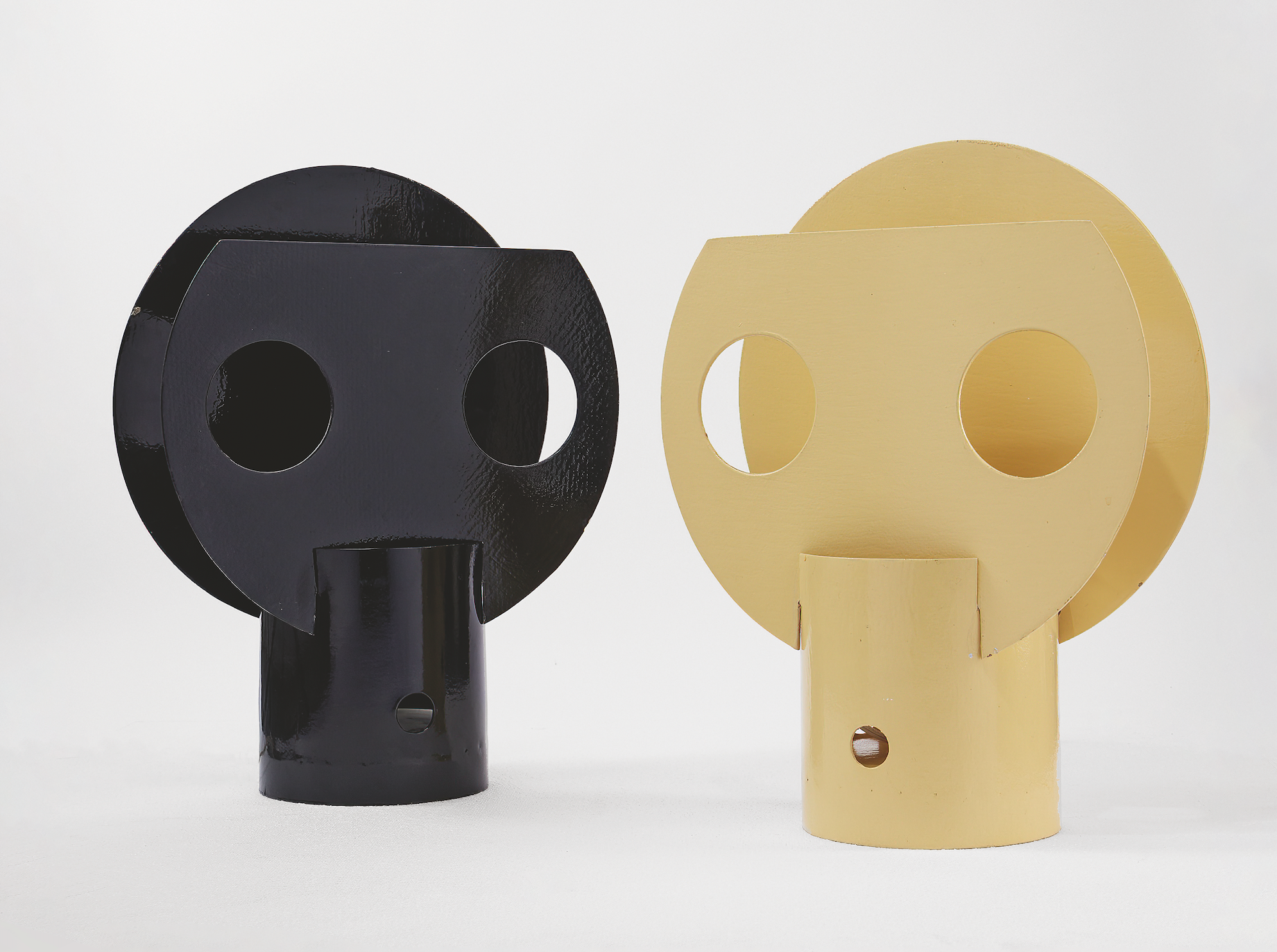
« Architecte de papier », comme il se définit lui-même, il ne réalise que très peu de projets de construction. Travaux de recherches, articles, ouvrages : il se passionne pour la réflexion théorique et la technique. Il renoue aussi de manière ponctuelle avec la création de meubles en bois et plus tardivement en tôle métallique.
Les œuvres de carton de Jean-Louis Avril comptent parmi les collections du Musée des Arts décoratifs, du musée de la ville de Saint-Quentin en Yvelines et autres institutions à l’étranger.
Cecile Ybert
Le marché
« Peu de pièces circulent sur le marché, remarque Edouard Bernard. Les modèles très courants en parfait état - comme un petit chevet - démarrent entre 500 euros. Les pièces plus rares, une belle chaise ou une lampe intéressent plus un collectionneur. Un prototype de table ou de chaise peut dépasser 5000 euros ».
Cécile Ybert